How do you reduce fine risk before a European road trip?
There is no single checklist that guarantees a fine-free trip in every country. You can reduce avoidable omissions by checking EU rules, country and route requirements, the vehicle, the driver, the cargo and the documents separately, then retaining evidence of each control.
This is an operational guide, not legal advice. Tolls, low-emission zones, speed, weight, roadworthiness and penalties differ between countries and can change. Check the official portals for every country on the route and the rules applying on the transport date.
What is common across the EU and what varies by country?
Some obligations share an EU framework, but application and penalties can vary. For example, Regulation (EC) No 561/2006 provides common driving-time and rest rules, while the European Commission separately publishes current national derogations and temporary exceptions.
| Area | Common basis | Route-specific check |
|---|---|---|
| Driving time and rest | Regulation 561/2006 | current national derogations and temporary exceptions |
| Tachograph | Regulation (EU) No 165/2014 | control practice, downloads, deadlines and national enforcement |
| Cabotage | Regulation (EC) No 1072/2009 | documents and penalties in the host state |
| Roadworthiness | Directive 2014/45/EU | national implementation and accepted documents |
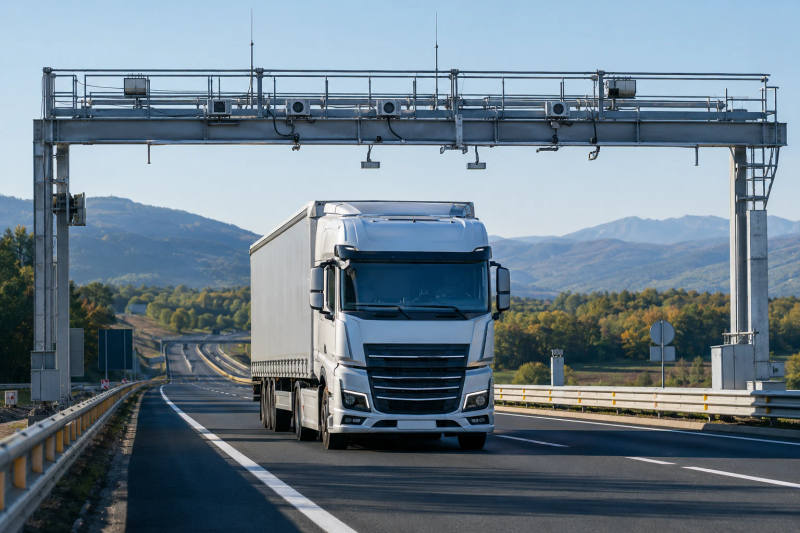
| Tolls, vignettes, OBU, LEZ and local restrictions | national or local systems | official country, toll-operator or city portal |
What should you check for the route and road charges?
For each country on the route, record the official source and the time checked:
- charging model: vignette, per-kilometre toll, barrier or OBU;
- vehicle category, axle count, mass and emissions class used for charging;
- tolled segments and weight, height or ADR restrictions;
- low-emission zones and local permits;
- proof of purchase, balance or device status before entering the segment.
Do not assume that payment in one country covers the next border or that an OBU works on every network.
What should you check on the vehicle and cargo?
Vehicle condition and documents
- roadworthiness inspection and the document recognised on the route;
- insurance, operator licence and certified copies required for the operation;
- tyres, lights, brakes, mandatory equipment and load securing;
- special permits for weight, dimensions or regulated goods.
Weight and dimensions
Do not stop at the total mass stated in the order. Check gross weight, axle distribution, dimensions and the limits on every segment. If loading data is estimated, define who confirms the final value before departure and when weighing is required.
What should you check for the driver and tachograph?
The European Commission explains that EU rules cover daily and weekly limits, breaks and rest periods, and that compliance is checked through tachograph records. From 1 July 2026, the scope extends to goods vehicles or vehicle combinations with a maximum permissible mass over 2.5 tonnes used in international transport or cabotage. For vehicles up to 3.5 tonnes, there is a conditional own-account exemption when driving is not the person’s main activity. See Regulation 561/2006 and the Commission’s official tachograph guidance.
Before departure, check:
- the correct card, time setting and required manual entries;
- activities and missing data within the period that can be inspected;
- available driving time based on actual records, not an optimistic estimate;
- downloads, retention and access to supporting records;
- national derogations or temporary relaxations applying on the route.
Analysis of downloaded files can identify recurring deviations after recording; it does not replace live planning or the driver’s decision to take a required break.
Which documents should be tied to the transport order?
The exact list depends on the operation, but the departure dossier should clarify:
- the order and transport document, including a CMR where applicable;
- the carrier’s identity and right to perform the operation;
- driver and vehicle documents;
- cargo documents and ADR or special permits;
- evidence of road charges and route permits;
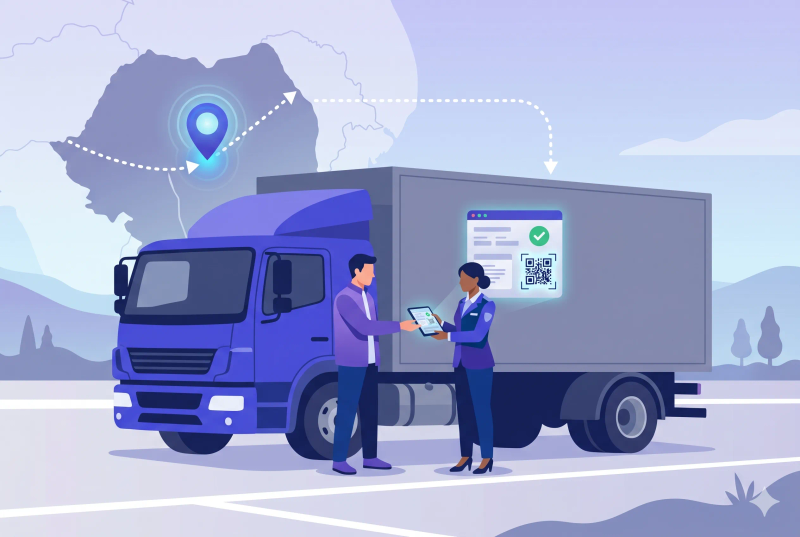
- documents required for cabotage, posting or national systems such as Romania e-Transport.
For transports within the Romanian system, use the separate Romania e-Transport and UIT code checklist.
How do you build a pre-departure control?
1. Assign an owner
Each check needs an owner and backup: dispatcher, fleet manager, driver or compliance lead. “The team checks it” is not a measurable responsibility.
2. Record the result
For each item, retain its status, source, date and checker. A tick without evidence is weak when the rule or route changes.
3. Define the stop condition
Specify what blocks departure: an expired document, unconfirmed toll, unclear mass, insufficient driving time, missing mandatory code or a route incompatible with the vehicle.
4. Repeat affected checks after a change
A replacement vehicle, different border, extra unloading point or modified order can change charges, documents and duties. Rerun the affected part of the checklist.
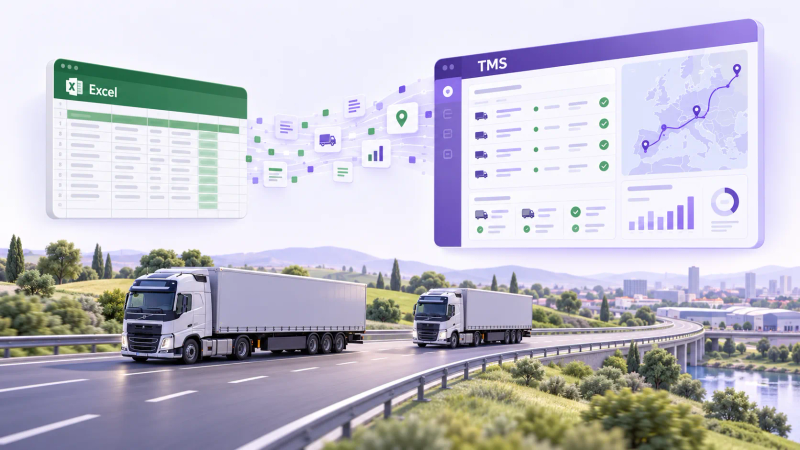
How can digital tools assist without guaranteeing compliance?
- A deadline calendar reduces missed dates but does not itself confirm legal validity.
- A digital dossier shortens document retrieval, but each copy must be current and accepted.
- Route planning shows the intended path, while restrictions and charges still need an official-source check.
- GPS monitoring shows operational position but does not automatically prove compliance or transmission to an authority.
- Tachograph analysis can identify deviations in uploaded files but is not live dispatch based on remaining driving time.
Short trip checklist
- countries, border points and any low-emission zones are confirmed;
- tolls, vignettes or OBU devices are checked against official sources;
- weight, axles, dimensions and permits match the route;
- roadworthiness, insurance, licences and driver documents are valid;
- driving time, card and tachograph records are checked;
- cargo and operation documents are accessible;
- national declaration and positioning duties have clear owners;
- there is an explicit stop condition and a process for changes.
What is the practical conclusion?
Do not pursue the impossible promise of “zero fines”. Use a repeatable process instead: an official source for every rule, a clear owner, evidence of the check and a stopped departure whenever a critical item is not confirmed.